
To view upcoming events or find out how to organise an event in our regional parks, visit our events page.
Regional parks notices

Baynons Brake Arena maintenance
1 September 2026
What: The arena at the Baynons Brake carpark is closed to allow for the recent works to settle.
When: Monday, 1 September until further notice
Firebreak maintenance in McLeans and West Melton Forests
September 2026
What: We will carry out firebreak maintenance along selected forestry roads and waterhole access routes in McLeans Forest and West Melton Forest. This work involves spraying vegetation to help keep these areas clear and accessible.
Where: McLeans Forest, West Melton Forest
When: Throughout September 2026.
Why: Maintaining firebreaks is an important part of preparing for the upcoming fire season. Keeping vegetation under control along roads and access routes helps reduce fire risk and supports access for firefighting vehicles if needed.
What visitors need to know: Park visitors may see workers, vehicles and spraying operations in the area while work is underway. Follow all signage and instructions. Take care around work sites, workers and vehicles. Allow extra space for crews carrying out maintenance.
We appreciate your cooperation while this important seasonal maintenance is completed.

Ashley Forest Harvest 2026
What: We will be harvesting stands of mixed-age Pinus radiata on the North Bank of the Ashley River. The total area is around 22 hectares.
Where: Ashley Rakahuri Regional Park, North Bank near Swamp Road.
When: Late-July to September 2026.
This harvest is part of Environment Canterbury’s commercial forestry programme. During the operation, some roads within the Regional Park will be temporarily closed and there will be increased machinery movement in and around the park.

Kaiapoi Island closed is temporarily closed
7 September 2026
What: Kaiapoi Island closed is temporarily closed due to surface flooding
When: Monday, 7 September 2026

Intake Road Forest Clearance 2026
What: We will be harvesting about six hectares of mixed-age Pinus radiata forest on the South Bank of the Waimakariri River.
Where: Waimakariri River Regional Park, near Intake Road. See map.
When: Late-July to Late-August 2026.
This area of forest contains 23- and 27-year-old pine trees. The trees will be harvested and the land returned to grass to help flood water move more freely and improve stopbank resilience. During harvesting, logging trucks will be using Intake Road.

McLeans Forest Harvest 2026
What: We're harvesting a stand of mature pine trees in McLeans Forest. The trees are around 29 years old and ready for harvest.
Where: McLeans Forest in Waimakariri River Regional Park When: Mid-July to September 2026.
This harvest is part of Environment Canterbury's commercial forestry programme. The work will be carried out by a specialist harvesting contractor under the supervision of Environment Canterbury forestry staff. We'll take care to protect park infrastructure during the harvest. Logging trucks will be travelling in and out of the forest via Haul Road during this time. This area is popular with walkers and cyclists, with several tracks running through and around the harvest site. For safety, tracks will be temporarily closed or diverted while work is underway.
Once harvesting is complete, the area will be replanted in 2027.
Contact: Customer Service: 0800 324636
Track closure: Baynons Brake gravel works
From 28 April 2026
What: Gravel extraction work is resuming at Baynons Brake. The section of track shown in red is closed until further notice. The track above the car park remains open.
When: From 28 April 2026.
Why: The closure is needed to allow gravel extraction to be carried out safely.
🚧 Signage is in place to keep people safe while work is underway.

View area of track closure at Bayons Brake

Taylors Road to Smiths Stream
We’re carrying out staged tree clearance, track upgrades, and vegetation works to improve visibility and access along the river corridor and make it safer for everyone using the park.
This work includes removing dead, sick, and overhanging trees, improving sightlines at entrances, and upgrading tracks where needed.
Temporary closures are required while machinery is operating to make sure the work can be carried out safely.
Stage 1 – Taylors Road entrance
What is happening
- Overhanging trees and any dead or sick trees will be removed at the Taylors Road entrance
- Vegetation will be cut back to improve sightlines
- Bollards and rope fencing will be moved further back
- A digger will be on site felling and processing trees, with spotters present to manage access as needed
Access changes
- The Taylors Road gate will be closed during this stage
- Park access will remain available from Main North Road via the river track (Hays Road)
Stage 2 – Upstream towards Smiths Stream
What is happening
Once the Taylors Road entrance works are complete, work will move upstream towards Smiths Stream to remove additional overhanging and problematic willow trees.
Access changes
- Taylors Road will reopen once works at the entrance/intersection are complete
- The road and track from Smiths Stream westward will be temporarily closed while this work is underway
- Once this section is finished and works move beyond the motorbike area, access will return to normal
Weedons Ross trailbike closure
30 October 2025

A section of the trailbike track at Weedons Ross Road has been closed until further notice, due to fallen and dangerous trees following wind events.
The rest of the track remains open.
Asbestos in Waimakariri River Regional Park
6 September 2023
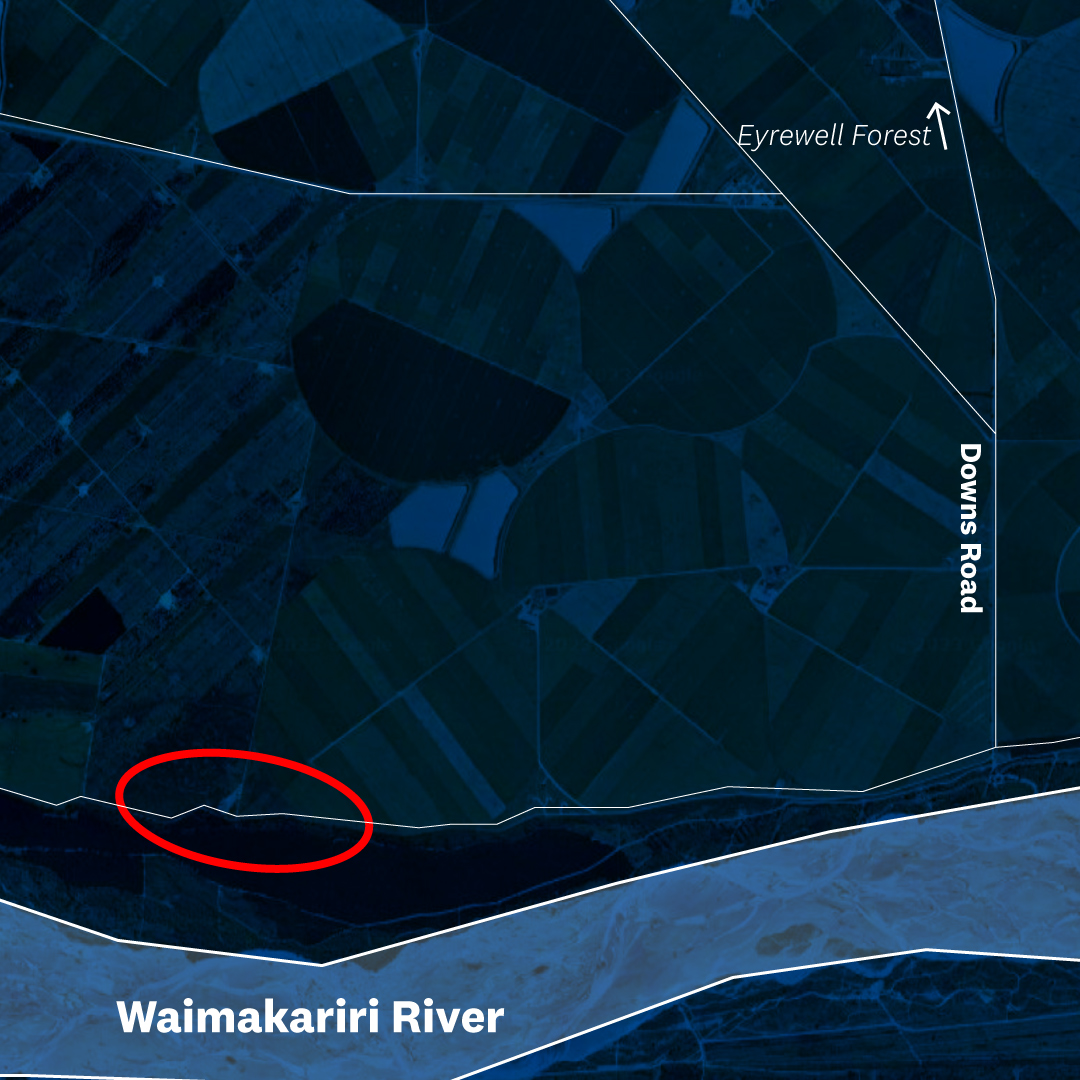
Asbestos-containing material (ACM) has been discovered in an old dumping site in Waimakariri River Regional Park.
We have been advised by contaminated land experts that as long as the material remains undisturbed, the risk to human health is very low.
The contaminated area is on the north bank of the Waimakariri River, west of Downs Road (see map). The park will remain open, but please avoid this area. Warning signage has been placed in the area.
Asbestos is very harmful to human health. To minimise harm, please do not disturb or come into contact with the waste in any way.
Update April 2024: The site remains closed to the public. We have completed the initial minor clean-up near the site, which targeted the asbestos-containing material at the bottom of the slope.
We are working on a long-term plan for the contaminated material and will provide an update when possible.