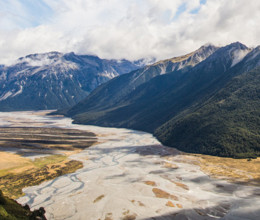
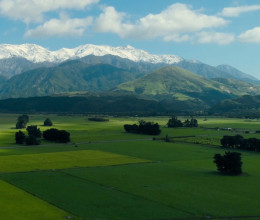
Canterbury's varied coastline includes historical ports and busy harbours, superb beaches, and diverse natural habitats including dunes and lagoons.
Lyttelton Harbour/Whakaraupō
The changes Lyttelton has seen:
The sealing and whaling industries of the 1790s and early 1800s used Port Cooper, as it was then known, to set their stores aboard overseas-bound vessels.
Wool was the main export from Lyttelton in the early years of the Canterbury settlers, as well as wheat. Frozen meat and sheep carcasses were a growth industry in the 1880s and 1890s. New jetties were built and big chunks of the harbour were filled and reclaimed, making a safer inner harbour area for anchorage.
The development of engineering factories and the beginnings of a proper sewage system for Christchurch created another growth market, leading to employment and the end of typhoid deaths in the 1870s. Electric lights went on at the wharves in 1882.
Antarctic exploration between 1901 and 1913 turned the world's eyes to Lyttelton where the Antarctic exploration ships were anchored. Ponies from Manchuria and huskies from Siberia were quarantined and trained nearby on Quail Island.
The advent of steam-powered vessels was another huge change. Migrants could now arrive in reasonable health, having a much shorter voyage with less chance of illness.
The mechanisation of farming with demand for machinery and threshing mills in the early 1900s boosted Lyttelton's traffic, later feeding into the city's own engineering factories.
World War I – 1914 to 1918 – provided Lyttelton with a huge boost in exported meat, wool and other products as the Government commandeered farm produce and increased exports to England. The growth in exports continued from Lyttelton from after WWI to 1935.
Environmental effects of Lyttelton Port
On the seabed
Dredging of a channel is necessary to ensure that large vessels, heavily laden and low in the water, can travel freely into Lyttelton to berth and load/unload. This involves a continual disturbance to the seabed in this area.
On air quality
In the days of sailing ships, the port contributed little to air pollution and noise. Unloading would have caused some noise, but nothing like that from a modern container port.
For the best part of the 20th century, the air was heavily polluted in Lyttelton as steam/coal powered vessels and trains puffed about and coal dust choked the air. In recent years, coal dust has been kept to a minimum by a spraying programme, steam trains have been replaced by diesel trains and road trucks, and coal-powered vessels are rare.
On the harbour's waters
Today, boats empty their waste tanks at sea or pump them out at the port. In the past, sewage from ships was dealt with much more haphazardly.
Of more concern today is the potential for an oil or fuel spill. Spills of a significant size need to be contained or dispersed using chemicals. Oil spills kill marine life and birds.
On the sea around Banks Peninsula
About 25% of all marine pollution comes directly from shipping activities. Plastic fishing gear, discarded bits of fishing nets (which do not break down or decompose easily) and rubbish from fishing vessels and other ships can be fatal for marine mammals, which need oxygen to survive and can drown if entangled underwater for too long.
Banks Peninsula
When Captain James Cook first spotted Hikuraki (Banks Peninsula) he thought it was an island because of the large sea inlets of Lyttelton Harbour/Whakaraupō on the northern side and Akaroa Harbour on the southern side. If he had explored either harbour, he would have realised the inlets do not join up.
Captain Cook named Hikuraki Banks Island after Joseph Banks, the botanist who accompanied him on his voyage to New Zealand.
Akaroa
In 1840, French settlers arrived at Akaroa, which had just been claimed under the Treaty of Waitangi by the English. To this day, Akaroa remains unique as the site of the only attempted settlement by the French in New Zealand.
Many streets have French names, and there are descendants of the original French families still living in Akaroa. The charm of this old French town, together with the incredible scenery encountered on the way, have assured Akaroa's popularity as a unique tourist destination.
Pegasus Bay
Some facts about Pegasus Bay
- It has 55 kilometres of wide, sweeping sandy beaches.
- It runs from Banks Peninsula to the Waipara River mouth.
- It is Canterbury’s only large stretch of sandy surf beaches.
- It contrasts sharply to the rest of the Canterbury coast of gravel and rock sediments.
- It is the most highly used coastline in the Canterbury region.
- Its popularity for recreation and development means high human impact and environmental effects.
How did Pegasus Bay get its name?
Pegasus was the name of the sailing ship which surveyed part of the South Island in 1809. The first mate of the brig Pegasus, William Stewart, gave Pegasus Bay its name. The captain of the ship, Captain S. Chase, laid claim to correcting James Cook’s charts by determining that ‘Banks Island’ was in fact a peninsula.